




















Environmental responsibility has moved to the forefront of how communities, businesses, and homeowners think about waste. What was once viewed as a simple matter of disposal has evolved into a broader conversation about sustainability, resource recovery, and the long-term health of the environment. Within this shift, the waste hauling industry has undergone significant change, adopting new practices, technologies, and standards that reflect modern expectations. Among the most important developments in this space has been the evolution of roll off dumpster services, which now serve as a central component of eco-friendly waste management across residential, commercial, and construction sectors.
Understanding how these services support environmental goals requires a closer look at the processes behind the containers that arrive at job sites and driveways every day. The role they play extends far beyond simple hauling, touching on recycling, material recovery, landfill reduction, and the broader effort to build a more sustainable waste economy.
The Changing Landscape of Waste Management
The waste management industry has shifted considerably over the past two decades. Rising landfill costs, stricter environmental regulations, and growing public awareness have prompted service providers to rethink how they collect, transport, and process the materials they handle. Customers now expect more than a container and a pickup schedule. They want assurance that their waste is being managed in ways that reduce environmental impact and support long-term sustainability.
Modern roll off dumpster services have responded to this expectation by integrating environmental stewardship into their core operations. Sorting practices, transfer station partnerships, recycling networks, and reporting tools have all become part of what reliable providers offer to their clients. The result is a service that is quieter, cleaner, and more thoughtful than it was in previous generations, yet still highly effective at handling the large volumes of material that contemporary projects generate.
Advancing Recycling Through Proper Sorting
One of the most significant contributions of modern waste hauling is the expansion of recycling capabilities at every stage of the process. In the past, much of what ended up in a dumpster was destined for the landfill by default. Today, providers work with transfer stations, recycling facilities, and specialized processors to ensure that recoverable materials are separated and redirected whenever possible.
Roll off dumpster services play an important role in this system by supporting both single-stream and source-separated collection approaches, depending on the needs of the project. Construction debris, metals, cardboard, clean wood, drywall, and certain plastics can often be diverted from landfill and sent to facilities that can give them a second life. Contractors and homeowners who work with providers committed to sustainable practices often find that a substantial portion of their waste never reaches a disposal site. This material recovery reduces the environmental footprint of every project and contributes to the broader circular economy that modern sustainability efforts aim to build.
Reducing Landfill Dependency
Landfills remain a necessary part of any waste management system, but reducing dependence on them has become a clear priority for both regulators and the public. Every ton of material that can be diverted through recycling, reuse, or specialized processing is a ton that does not consume landfill capacity, produce methane emissions, or contribute to the long-term challenges associated with buried waste.
Modern roll off dumpster services actively support landfill reduction through their partnerships, processes, and equipment. Providers that invest in advanced sorting capabilities, track diversion rates, and work with clients to design appropriate disposal strategies help limit the flow of materials to landfill sites. This work is often invisible to the customer, yet it produces measurable environmental benefits that accumulate over time. For businesses that track sustainability metrics or pursue green building certifications, choosing a provider with strong diversion performance can translate into meaningful progress toward formal environmental goals.
Supporting Green Building and Construction Practices
The construction industry has become a leader in embracing sustainability, with green building certifications, low-impact design principles, and efficient resource use becoming standard expectations on many projects. Waste management plays a key role in these initiatives, and programs such as LEED specifically reward projects that achieve high levels of waste diversion. This creates a direct link between the construction team and the hauling partner, making the quality of service a meaningful factor in whether environmental targets are met.
Roll off dumpster services designed with sustainability in mind help builders achieve these goals by providing the containers, reporting, and logistical support required to document and manage diversion efforts. Separate containers for specific materials, detailed tracking of volumes, and clear communication about where materials ultimately go all support the documentation requirements of green certification programs. This partnership transforms the waste hauler from a simple vendor into a true collaborator in the project’s environmental performance.
Improving Transportation Efficiency and Emissions
Transportation is a significant contributor to the environmental footprint of any waste management operation. The trucks that deliver and retrieve containers travel many miles each day, and the efficiency of those routes has a direct impact on fuel consumption, emissions, and overall sustainability. Modern providers have invested in route optimization software, newer vehicles with cleaner engines, and scheduling systems that reduce unnecessary trips.
Roll off dumpster services benefit from these improvements in meaningful ways. Strategic scheduling reduces the number of empty miles traveled, while newer equipment produces fewer emissions per mile. Some providers have also begun exploring alternative fuel options, including compressed natural gas and electric vehicles, for portions of their fleets. These efforts may not be immediately visible to customers, but they contribute to a cleaner operating model that aligns with the sustainability expectations of communities across the country.
Encouraging Responsible Disposal Practices Among Customers
Beyond the operational side of the business, modern providers play an important role in educating customers about responsible waste practices. Homeowners and contractors often benefit from guidance on what can and cannot go into a dumpster, how to separate recyclable materials effectively, and how to plan a project to minimize waste from the outset. This educational component transforms the customer from a passive user of the service into an active participant in the waste reduction effort.
Roll off dumpster services that take this approach help shift attitudes and behaviors in ways that produce long-term environmental benefits. When customers understand how their choices affect the final destination of their waste, they tend to make better decisions about materials, sorting, and project planning. Over time, this awareness contributes to a culture of conscious waste management that extends well beyond any single project.
Handling Specialty Materials With Care
Not all waste is created equal. Certain materials require specialized handling to protect the environment and meet regulatory requirements. Electronics, appliances containing refrigerants, tires, batteries, and items with hazardous components must be managed through approved channels rather than mixed with general debris. Providers that understand these requirements help customers avoid costly errors while ensuring that potentially harmful materials are disposed of safely.
Modern roll off dumpster services include processes for identifying and redirecting such materials to the appropriate facilities. Clear customer guidelines, staff training, and partnerships with specialty processors all support this effort. The result is a waste management approach that protects local ecosystems, complies with environmental regulations, and reduces the risks associated with improper disposal. For customers, this level of care brings peace of mind and ensures that their projects do not inadvertently contribute to environmental harm.
Contributing to Cleaner, Healthier Communities
The cumulative effect of sustainable waste hauling extends beyond individual projects to benefit entire communities. Clean neighborhoods, efficient construction zones, and well-managed commercial operations all contribute to a higher quality of life for residents. When waste is handled responsibly from start to finish, the broader environment benefits in ways that are often subtle but deeply important.
Reliable roll off dumpster services contribute to this community-level impact by providing the infrastructure that allows projects to move forward without leaving environmental consequences behind. Streets remain cleaner, construction sites operate more safely, and surrounding properties are spared the visual and practical effects of poor waste management. This contribution supports the overall health and appeal of the communities where providers operate, reinforcing the connection between responsible business practices and community well-being.
Conclusion
The modern approach to waste hauling reflects a meaningful evolution in how businesses, communities, and individuals think about their environmental responsibilities. Through advanced recycling practices, landfill reduction efforts, support for green building, transportation efficiency, customer education, and careful handling of specialty materials, roll off dumpster services have become an essential part of sustainable waste management. Their contributions reach across residential, commercial, and construction sectors, producing benefits that extend well beyond any single project or customer.
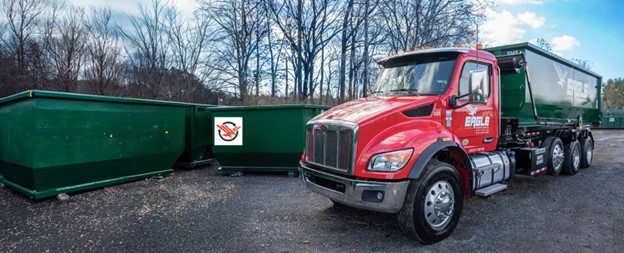
At Eagle Transfer Services, we are proud to play a role in advancing these environmental goals for the customers and communities we serve. Our team is committed to providing dependable, professional, and environmentally conscious waste hauling solutions that reflect the values of modern sustainability. Whether the project involves a home renovation, a large commercial cleanout, or a complex construction site, we approach every job with a focus on efficiency, responsibility, and customer service. By combining experienced operations with thoughtful environmental practices, we help our clients complete their projects with confidence and contribute to a cleaner, healthier future. When customers choose Eagle Transfer Services, they gain a partner dedicated to delivering reliable results and supporting the sustainability goals that matter most to the communities we serve.